
About Data Model
PISTIS Data Model (PISTIS-DM) is an integrated model designed for data sharing and utilization among three demonstrators i.e., Mobility & Urban Planning, Energy and Automotive, with possibility to grow as more demonstrators join the PISTIS Platform.
Data Modeling Process
Data modeling is a complex task which becomes even complex when multiple domains, disciplines, sectors and experts with diversity of background knowledge get involved in one data modeling task. In PISTIS project, initially we have three demonstrator hubs i.e., Mobility & Urban Planning, Energy and Automotive, including more than fifteen partners contributing in the PISTIS-DMP in different capacities such as source data provider, metadata explanatory experts, data semantics formulators, data quality analyzers and data interoperability monitors. Keeping in view the diversity of the PISTIS data modeling task we designed the PISTIS-DMP in such a way that all partners can contribute to their best by supporting each other in a back and forth cyclic knowledge sharing channel. The Figure below shows the task oriented PISTIS-DMP that we developed and adopted for PISTIS Data Modeling task, keeping in view the capacity of different stakeholders, their expertise, background and data assets occupancy.
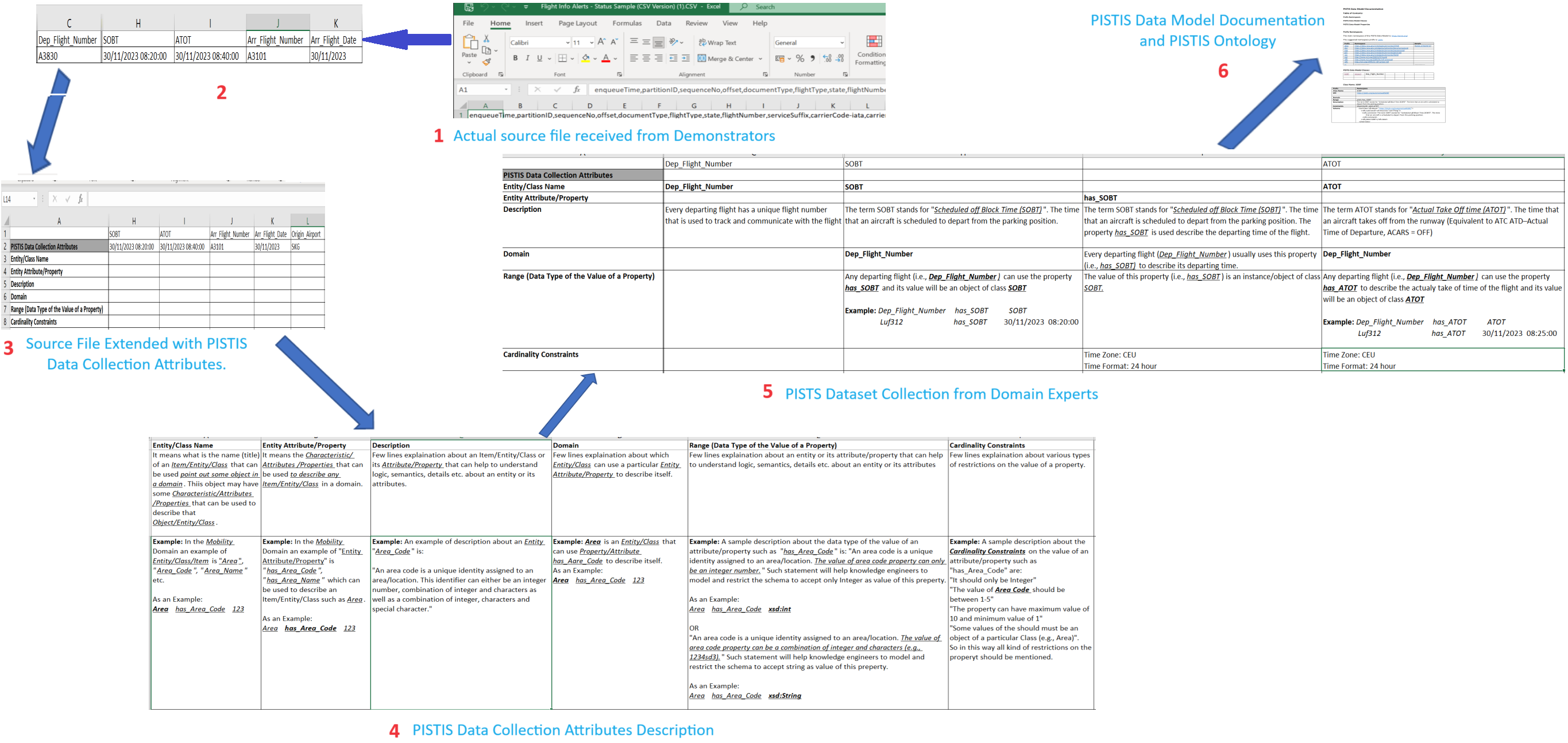
Metadata Collection Template (MCT)
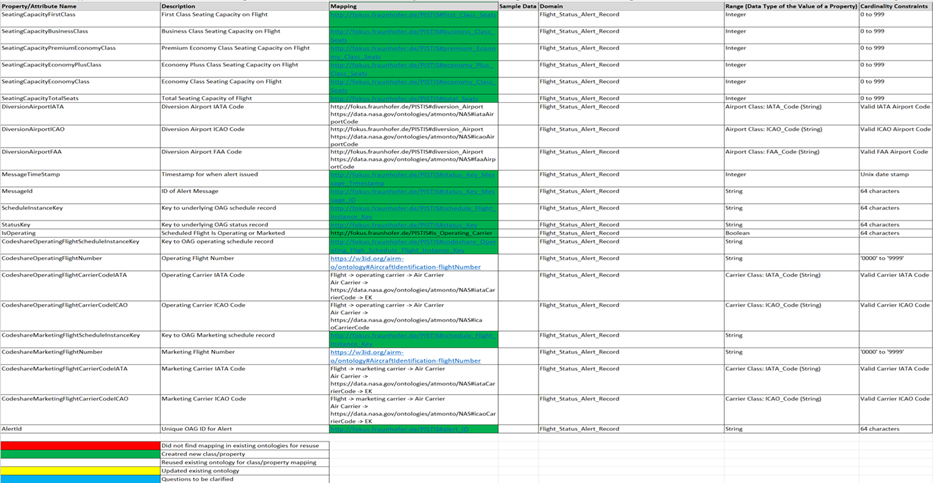
PISTIS Metadata Collection Template (PISTIS-MCT) is a self-explanatory mechanism in the form of structured sheet to collect missing data, metadata and information from domain experts who are well educated in their domains but are not familiar or less familiar with technical aspects and features of data that can be helpful in data modeling tasks. The PISTIS-MCT was discussed and shared with project demonstrators, to be filled for every provided dataset. The PISTIS-MCT is designed in such a way (as shown in the Figure below) that it includes almost every missing data entity, its categorization, description, type, semantics, and reasoning perspectives to maximize the benefit by using OWL and reasoning. Every collection item is well explained in the template with its description, one example and sample code. The PISTIS-MCT has two perspectives i.e., Class/Entity Perspective and Property/Attribute Perspective.
Reuse of Existing Ontologies
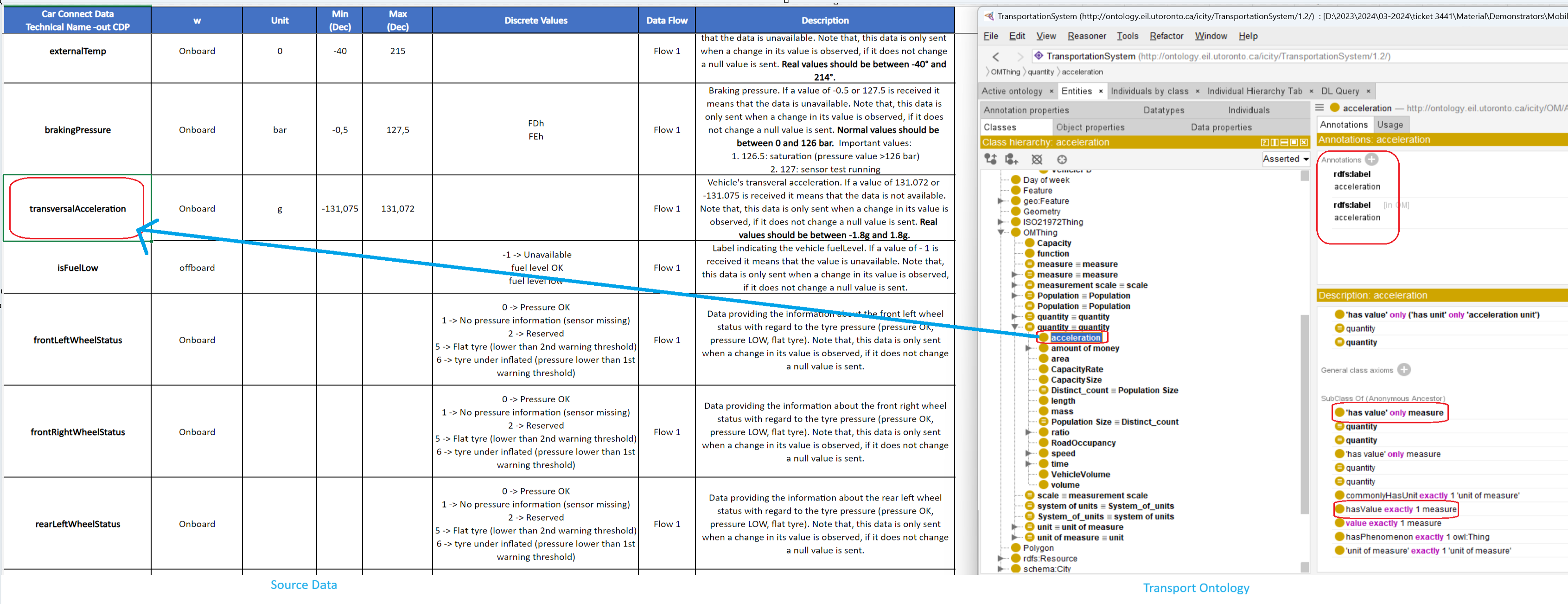
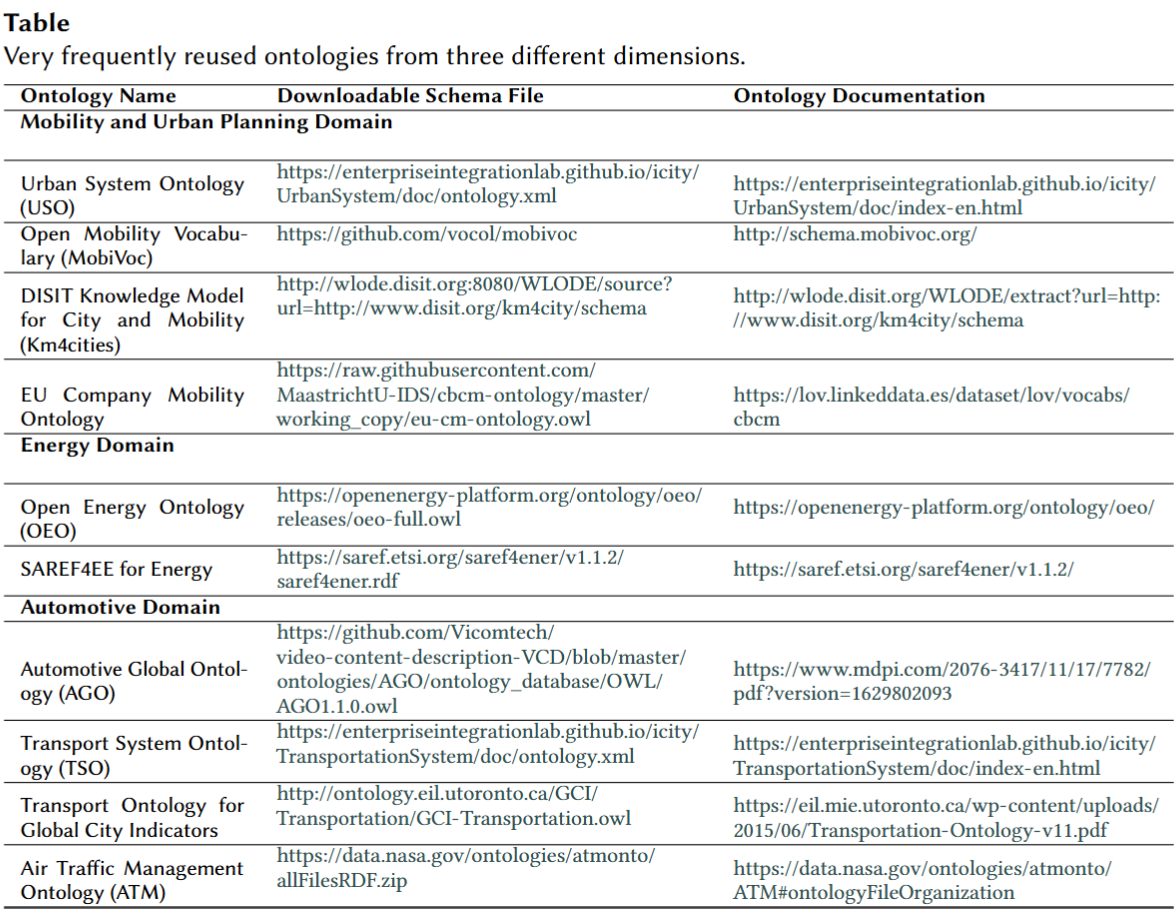
One of the key tasks in data modeling is to maximize the interoperability by reusing existing ontologies (where ever possible). Since, the PISTIS-DM is developed for multi domain and multi disciplines (currently having three demonstrator hubs), therefore during the modeling task, reuse of existing ontolgoies is taken care to its maximum (as shown in the Table below). After the metadata collection of PISTIS domain datasets from related stakeholders, each data entity is analyzed from its metadata perspective keeping in view data semantics extracted from metadata descriptions. These entity descriptions, definitions, comments and labels are used to justify the semantic interoperability between PISTIS-DM and existing ontolgoies and a mapping is documented based on matching semantics (as shown in the Figure below). The Figure below also shows that PISTIS-DM entities are mapped to multiple ontologies from various domains/sectors (based on semantic interoperability) resulting into unified data model for Mobility & Urban Planning, Energy and Automotive domains with open opportunities for further enhancements to other domains with the growing need of PISTIS Platform. public/assets/datamodels/reused ontologies.png
OWL Implementation
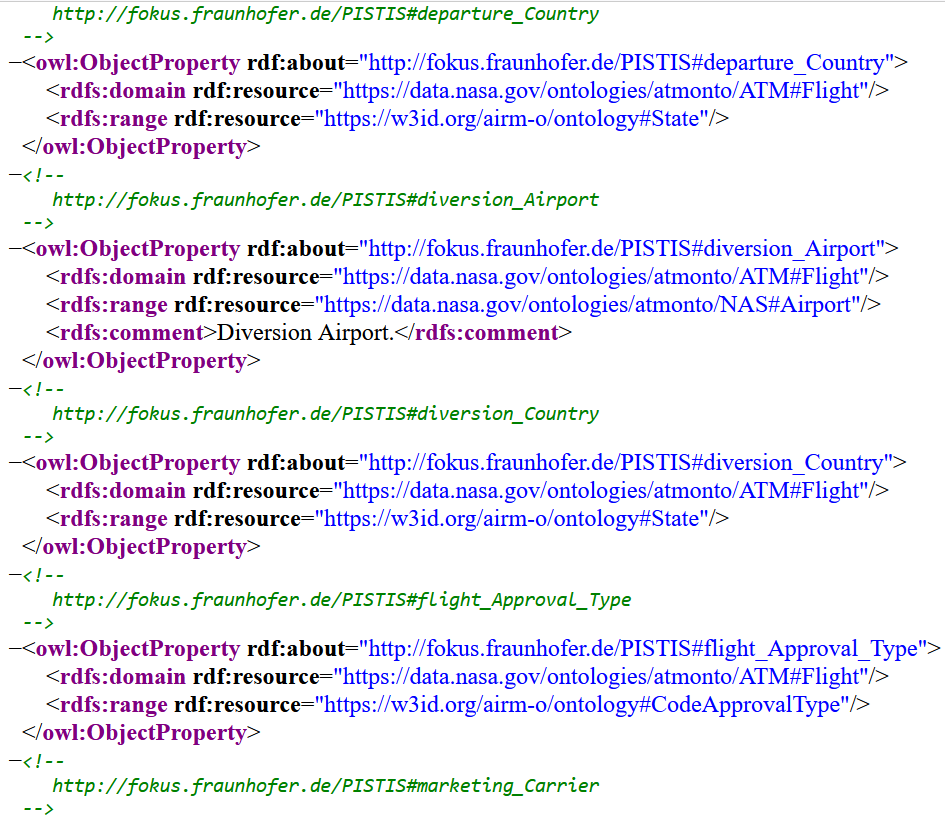
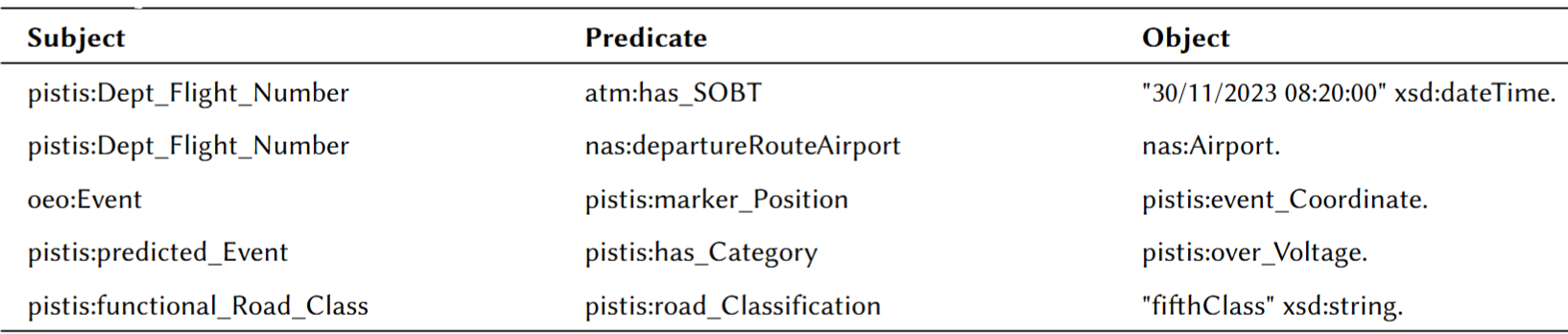
PISTI-DM is implemented in OWL by using Protégé as an ontology editor. Metadata about every dataset is modeled with classification as Class, Property (object, datatype), property constraints etc. Figures below shows the sample OWL code of the developed ontology and the triplicfication of the modeled entities.
SPARQL Query and Visualization
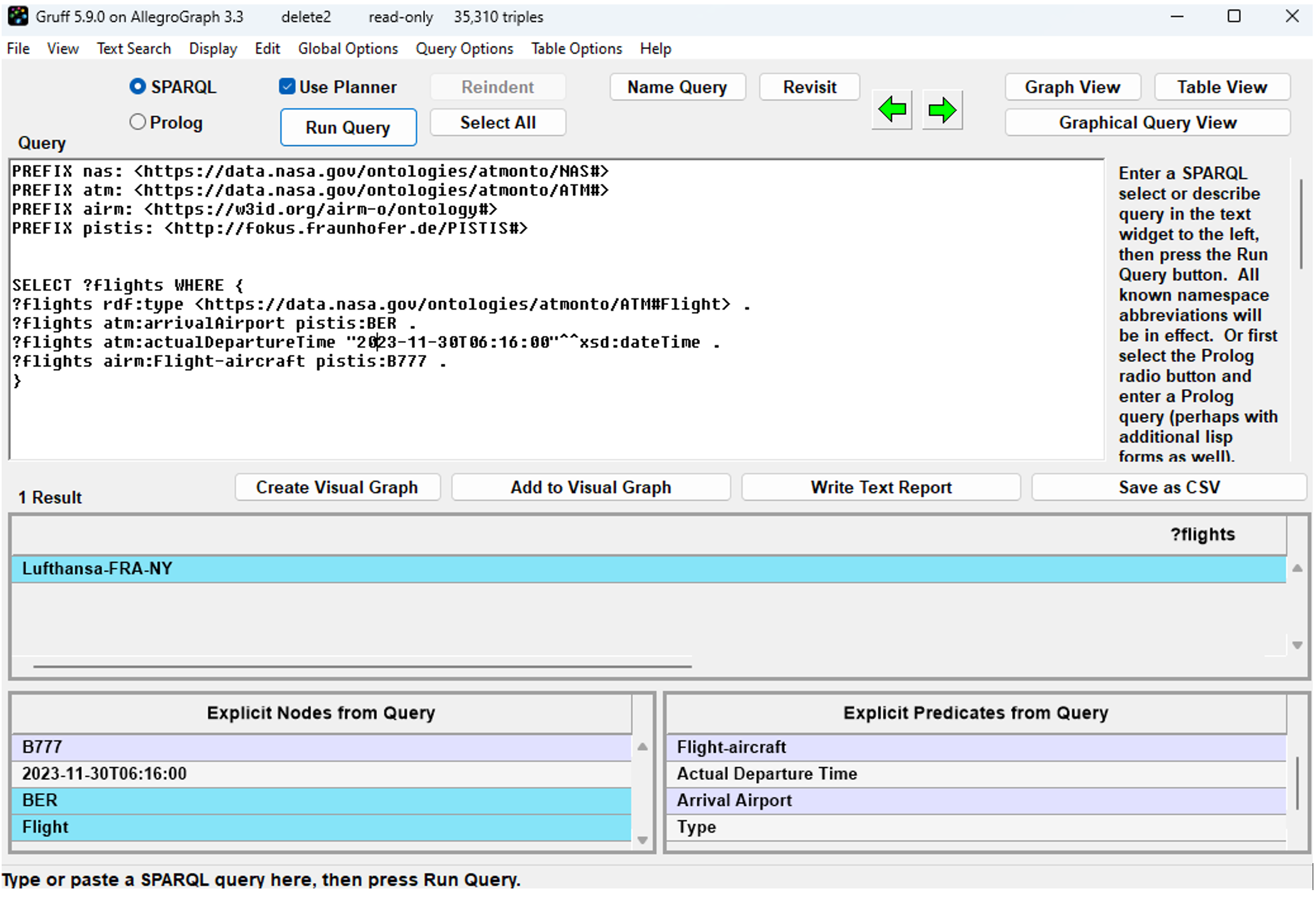
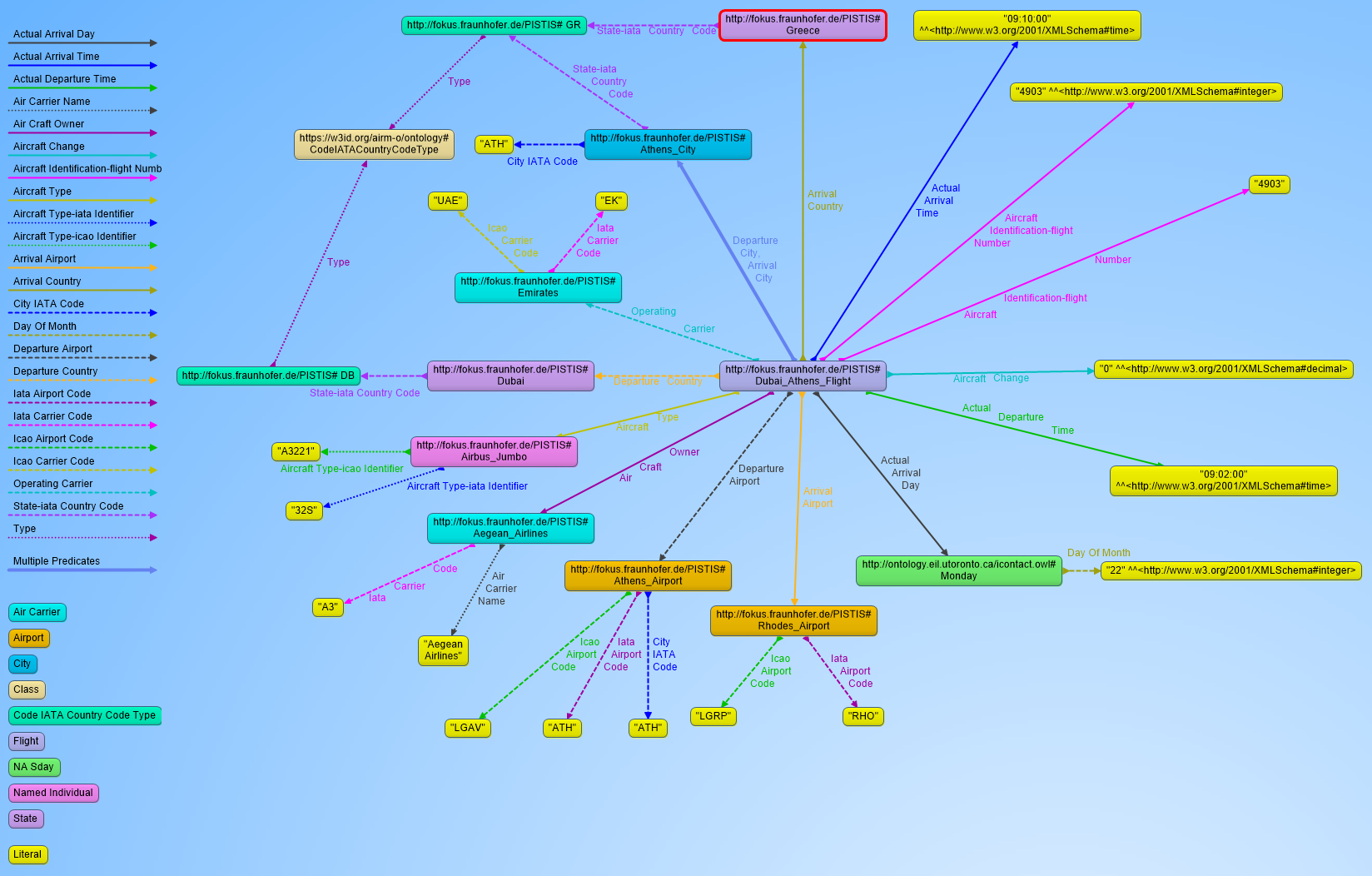
For experimental and query answering purposes, PISTIS-DM with corresponding proof of concept datasets is loaded into a graph database (e.g., GraphDB) and several queries are performed for evaluation purposes (as shown in the Figure below). The other Figure below shows the visulization of the ontology by using the semantic Web browswer (Gruff).
Important Downloads
- Metadata Collection Template (MCT) Download
- Sample Datasets, Mapping,Triple Stores, Visual Representation Download
- Implemented as OWL ontology Download
- Introductory Paper Download
Future Plans
- Updating the Data Model and its implementation in a rpeating cycle with new domain knowledge and concepts
- Integrating PISTIS-DM with PISTIS Data Enrichment Tool
- Enhancing this integrated setup as PISTIS-DM Workbench where domain experts and knowledge engineers can work together in an integrated online environment